BCR expects Romania’s real GDP to contract by 0.7% in 2026
BCR, the second-largest bank in Romania and part of the Erste Group, estimates a recession for Romania’s economy in 2026, with real GDP expected to contract by 0.7%, according to the bank’s latest report, which brings a downward revision from the previous forecast of -0.3%.
Radu Dumitrescu · Journalist
· 2 min read
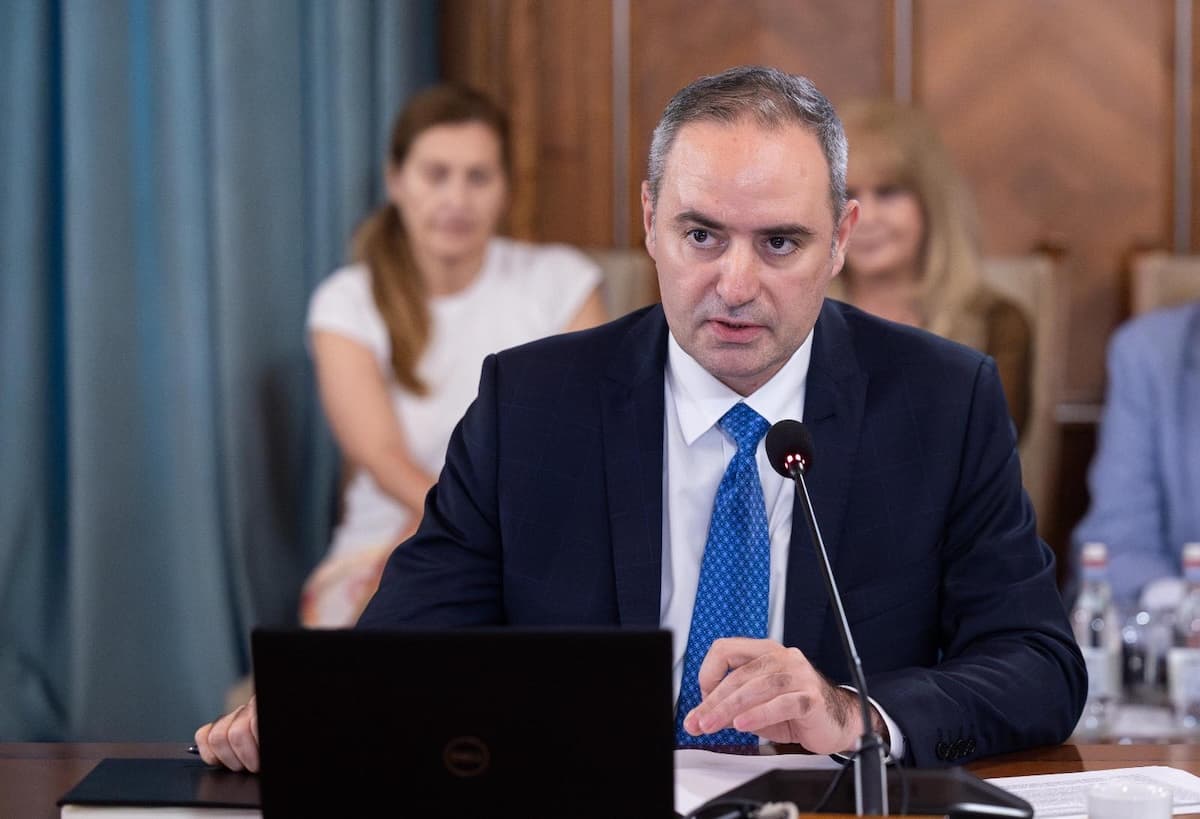
Impacted by political instability and an ailing current account balance, the country nevertheless “appears to be emerging from recession,” although short-term dynamics remain weak, according to a report signed by BCR economists Ciprian Dascălu and Vlad Ioniță, cited by Profit.ro.
“We estimate that economic activity will remain modest throughout the second half of 2026, followed by a gradual recovery toward economic potential in 2027. After moderate growth in 2025, we forecast a slight contraction in 2026, of approximately -0.7%, mainly driven by weak consumer demand, partially offset by EU-supported investment,” the report showed.
Inflation slowed to 6.2% year-on-year in August, amid statistical base effects, and is expected to reach 6.4% year-on-year by the end of the year. Meanwhile, the National Bank of Romania is expected to keep its monetary policy rate unchanged at 6.50% throughout 2026, while government bond yields should stabilize around 7.0%, according to the same report.
“Overall, the outlook is driven by fragile domestic demand, persistently high inflation, and elevated political and fiscal uncertainties. Investment decisions will largely depend on credible policy frameworks capable of reducing uncertainty and helping restore consumer confidence. Maintaining the investment-grade sovereign credit rating depends on restoring policy coherence, with a view to reducing the risk of deviations from fiscal targets and, ultimately, limiting the upward trend in the debt-to-GDP ratio,” the authors of the report said.
The analysis further noted that the publication of detailed GDP data for the second quarter of 2026 did not bring any major revisions. The economy stagnated on a quarterly basis in the second quarter of 2026 and contracted by 0.4% year-on-year. In the first half of 2026, GDP recorded a 0.7% year-on-year decline.
From the demand perspective, investment was the only factor that contributed positively to growth in the second quarter, with all other components having a negative effect.
“We continue to expect a recession in 2026, with real GDP expected to contract by 0.7%, a downward revision from our previous forecast of -0.3%. The adjustment reflects the somewhat disappointing developments in the first half of the year. Consumption is expected to remain moderate this year, as indicated by high-frequency data, with high inflation keeping real wage growth in negative territory throughout the year. A slight partial improvement could emerge in the second half of the year,” the two BCR economists said.