BCR Romania Manufacturing PMI: Downturn sustained across the Romanian goods-producing sector in August
Softer falls in production and new orders signalled - Sharpest decrease in input buying since data collection began - Cost pressures cool, but charge inflation picks up
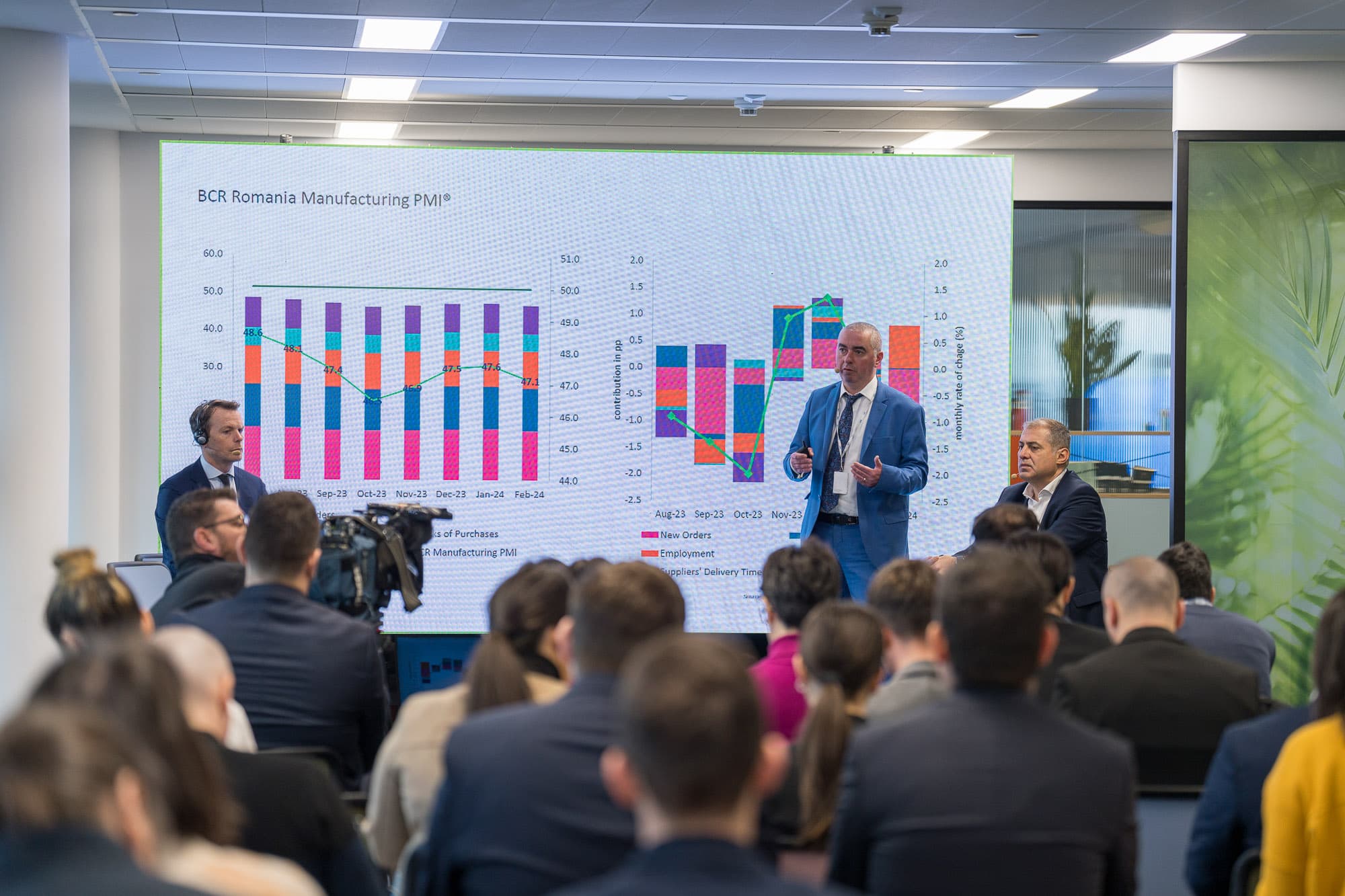
- Softer falls in production and new orders signalled
- Sharpest decrease in input buying since data collection began
- Cost pressures cool, but charge inflation picks up
Romania's manufacturing economy contracted again in August, as firms continued to contend with weak demand conditions.
Though there were sustained falls in output and new orders, the rates of decline eased.
Purchasing activity was trimmed at the quickest rate on record. With that, cost pressures cooled slightly, but were nevertheless still elevated. Selling prices rose at the fastest pace since February.
The headline BCR Romania Manufacturing PMI® is a composite single-figure indicator of manufacturing performance derived from indicators for new orders, output, employment, suppliers’ delivery times and stocks of purchases.
A PMI reading above the 50.0 no-change mark signals an improvement in the health of the sector over the month, while a figure below 50.0 points to a deterioration.
The PMI picked up from 47.8 in July to 48.4 in August. The latest reading was indicative of a sustained, but softer downturn. Though conditions remained challenging for Romanian manufacturers across the board, notably, all five components imparted positive directional influences on the headline PMI in August.
The largest sub-component - new orders - remained a key factor behind the overall deterioration in the health of the sector, having declined for the second successive month in August. Panel members noted the challenging economic environment and subdued demand conditions as limiting factors.
Export performance was again weak in August, although the pace of contraction in international orders was the second-slowest on record.
Predominantly reflecting lower sales, manufacturers in Romanian scaled back their production volumes for a third month running in August. Some firms reportedly faced staffing issues.
In line with lower output requirements, firms continued to take a cautious approach to purchasing in August. The latest fall in input buying was not only strong, but the quickest on record. At the same time, manufacturers continued to run down their stocks of purchases in August. The rate of depletion was the softest for three months, however.
Despite subdued demand across the sector, average lead times on the delivery of inputs lengthened in August, as has been the case since the start of data collection. The deterioration in vendor performance was one of the most pronounced on record.
With that, input prices continued to rise at a sharply elevated pace in August, as firms noted raised raw material, fuel and labour costs. Following the drop in demand for inputs, inflationary pressures eased on the month, however.
Free newsletters
Romania, in your inbox before your first coffee.
Get the Daily — the morning briefing, free, in English, unsubscribe anytime. Want business, real estate or travel digests too? Pick your newsletters →