BCR Romania Manufacturing PMI: Romanian manufacturing sector downturn persists in October
Slower declines in output and new orders recorded - Inflationary pressures build - Employment levels down for fifth month running
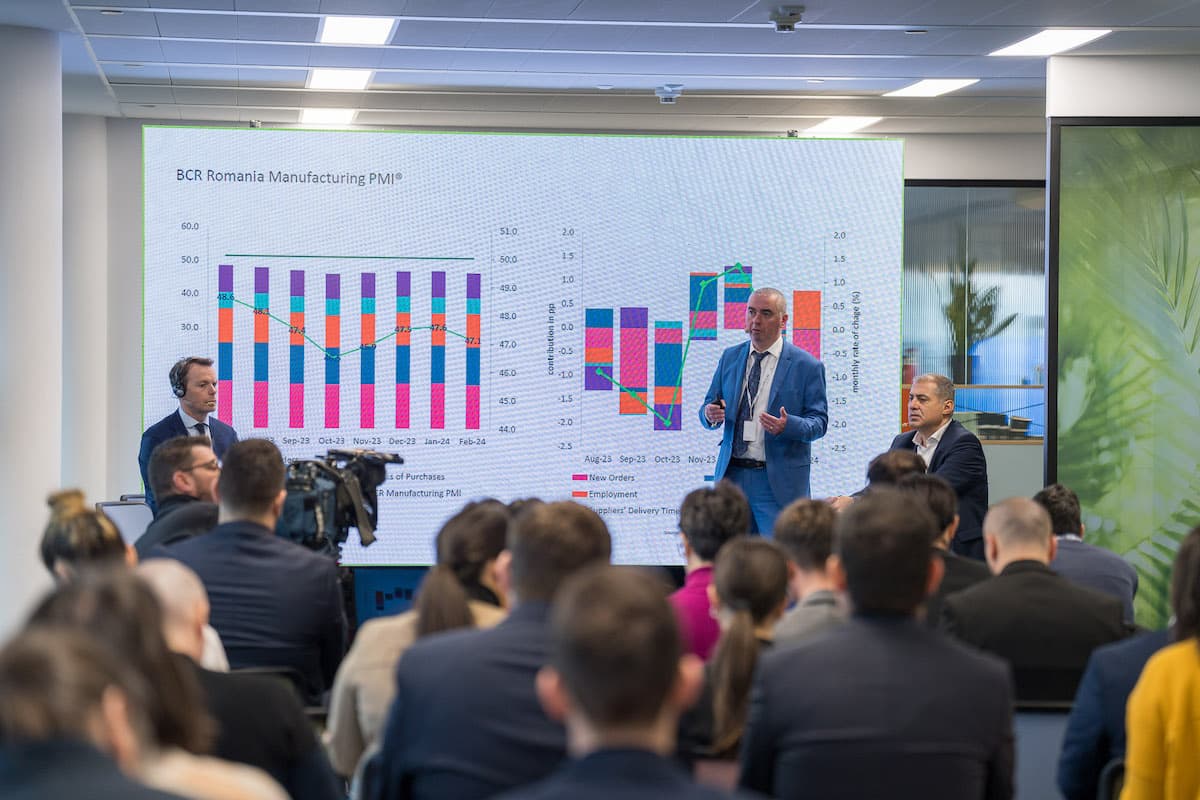
- Slower declines in output and new orders recorded
- Inflationary pressures build
- Employment levels down for fifth month running
The Romanian manufacturing sector entered the final quarter of the year stuck in contraction territory. Though operating conditions remained challenging, declines in both production and new orders were slower than in September. At the same time, firms continued to make cuts to their headcounts, but only at a marginal rate.
Despite reduced input buying, cost pressures picked up in October to a rate above the series average. At least some of this burden was passed on to customers, however, through raised selling prices.
The headline BCR Romania Manufacturing PMI® is a composite single-figure indicator of manufacturing performance derived from indicators for new orders, output, employment, suppliers’ delivery times and stocks of purchases.
A PMI reading above the 50.0 no-change mark signals an improvement in the health of the sector over the month, while a figure below 50.0 points to a deterioration.
The headline PMI rose from 47.3 in September to 48.1 in October, but signalled a further deterioration in the health of the sector - the fourth in as many months. Whilst up by nearly a whole index point, the latest reading remained just below the series average (48.4).
The principal drag on the Romanian manufacturing economy was the new orders component - which carries the largest weight in the headline index at 30%. The sustained decline in order book volumes came amid reports of muted demand and difficult economic conditions. Though solid, the rate of contraction did slow from September. Weighing on total new orders, there was also a sharp drop in international sales in October.
The subdued demand environment influenced firms' decisions on output in October. Production volumes decreased further as a result, but again at a slightly reduced rate than seen in September.
The latest data showed that manufacturers in Romania were continuing to fulfil capacity reduction plans in October. Workforce numbers fell for a fifth month in a row, albeit only marginally. Nevertheless, firms were still able to reduce the level of orders outstanding in October. While some panellists blamed a lack of incoming new work, others mentioned a slight drop in pressure on capacity having experienced fewer disruptions to output compared to September.
Inventory trends across Romania were less negative in October. Though stock of purchases fell further, the rate of depletion was only fractional and the least pronounced for five months. Meanwhile, manufacturers reported a sustained decline in their quantities of purchases as they reportedly had sufficient stocks to support their production requirements.
Free newsletters
Romania, in your inbox before your first coffee.
Get the Daily — the morning briefing, free, in English, unsubscribe anytime. Want business, real estate or travel digests too? Pick your newsletters →