BCR Romania Manufacturing PMI: Romanian manufacturing sector contracts at sharpest rate in 18-month survey history
Survey record decline in new orders - Input stocks down at sharper rate amid strong drop in buying - Softest cost pressures for over a year signalled
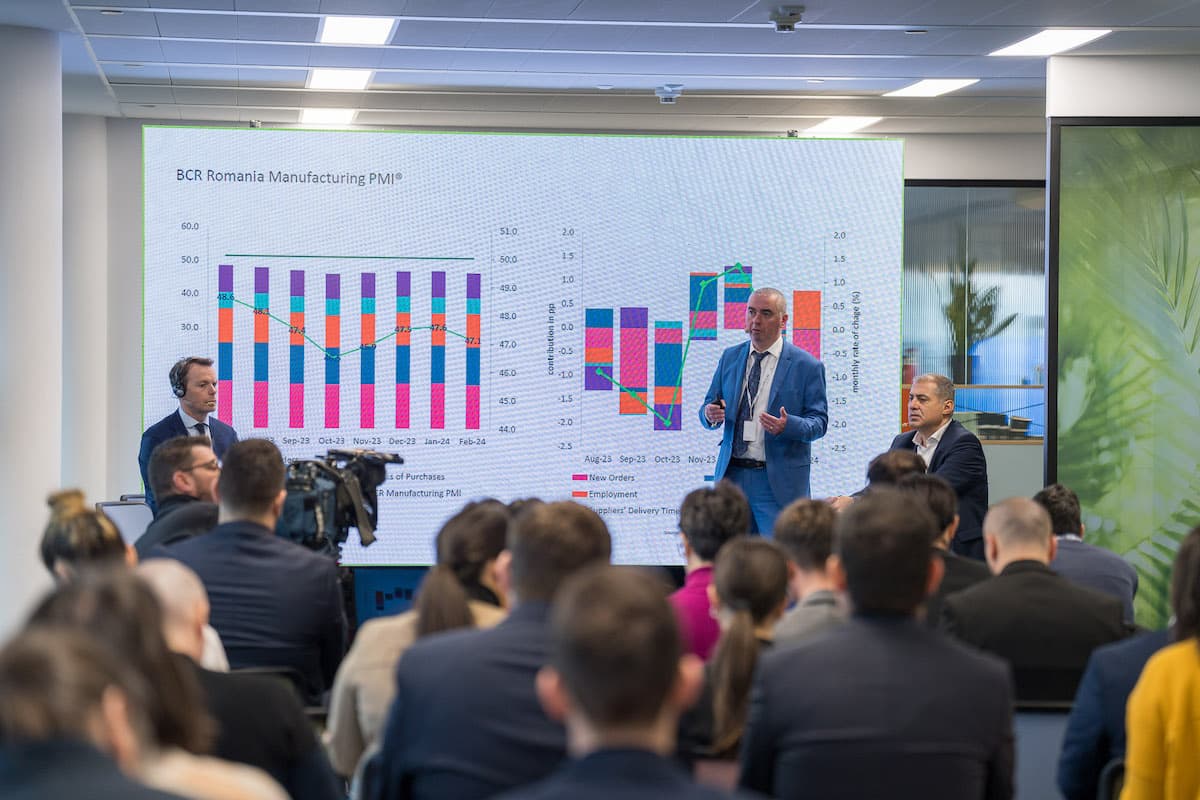
- Survey record decline in new orders
- Input stocks down at sharper rate amid strong drop in buying
- Softest cost pressures for over a year signalled
Romania's manufacturing sector ended 2024 on a weak footing, having faced the most challenging business conditions on record (since July 2023). At the centre was weakness in the sales environment, as order book volumes decreased at the sharpest rate seen across the 18-month survey history. As a result, input buying was reduced at a near-record rate, supporting efforts to run down pre-production inventory levels. Nevertheless, manufacturers faced noticeable delays on input deliveries, linked to issues with couriers.
On a more positive note, Romanian goods producers signalled the softest cost pressures seen for 13 months in December. However, with demand uncertainty, output charges were raised only marginally.
The headline BCR Romania Manufacturing PMI® is a composite single-figure indicator of manufacturing performance derived from indicators for new orders, output, employment, suppliers’ delivery times and stocks of purchases.
A PMI reading above the 50.0 no-change mark signals an improvement in the health of the sector over the month, while a figure below 50.0 points to a deterioration.
The PMI dropped from 48.0 in November to 46.4 in December. The headline index signalled the most challenging operating conditions seen on record (since July 2023).
Latest data revealed persistent weakness in the sales environment, with order book volumes contracting at the sharpest pace on record. Political instability, budgetary constraints at clients and a lack of customer interest were cited as factors contributing to muted demand.
Weighing on total new orders was a further decrease in export sales in December. Despite easing slightly, a strong rate of decline was sustained.
It was apparent that sales conditions fed through into firms' decisions on production as output fell at a strong rate that was the joint-fastest in the series history, equal with that seen in October 2023.
As a result, input requirements were lower, and companies reduced their buying activity in response. As well as strong, the rate of contraction was the fastest seen since August.
The combination of lower purchasing activity and subdued incoming new work (which reduced the need to carry additional input stocks) fuelled a further decrease in pre-production inventories.
Nevertheless, suppliers' delivery times lengthened again during December, stretching the trend of deteriorating vendor performance to a year-and-a-half. A number of panellists blamed courier delays.
Free newsletters
Romania, in your inbox before your first coffee.
Get the Daily — the morning briefing, free, in English, unsubscribe anytime. Want business, real estate or travel digests too? Pick your newsletters →