Concelex proposes in New York a new approach to investments in strategic infrastructure on NATO's Eastern Flank
On the sidelines of the UN General Assembly in New York, Concelex and Atlantic Council Romania hosted the roundtable "Anchoring the Eastern Flank: Critical Infrastructure and Transatlantic Capital in Central and Eastern Europe", which was addressed by the President of Romania, Nicusor Dan. The event looked at how strategic infrastructure on the Eastern Flank will be assessed and financed over the next decade of investment.
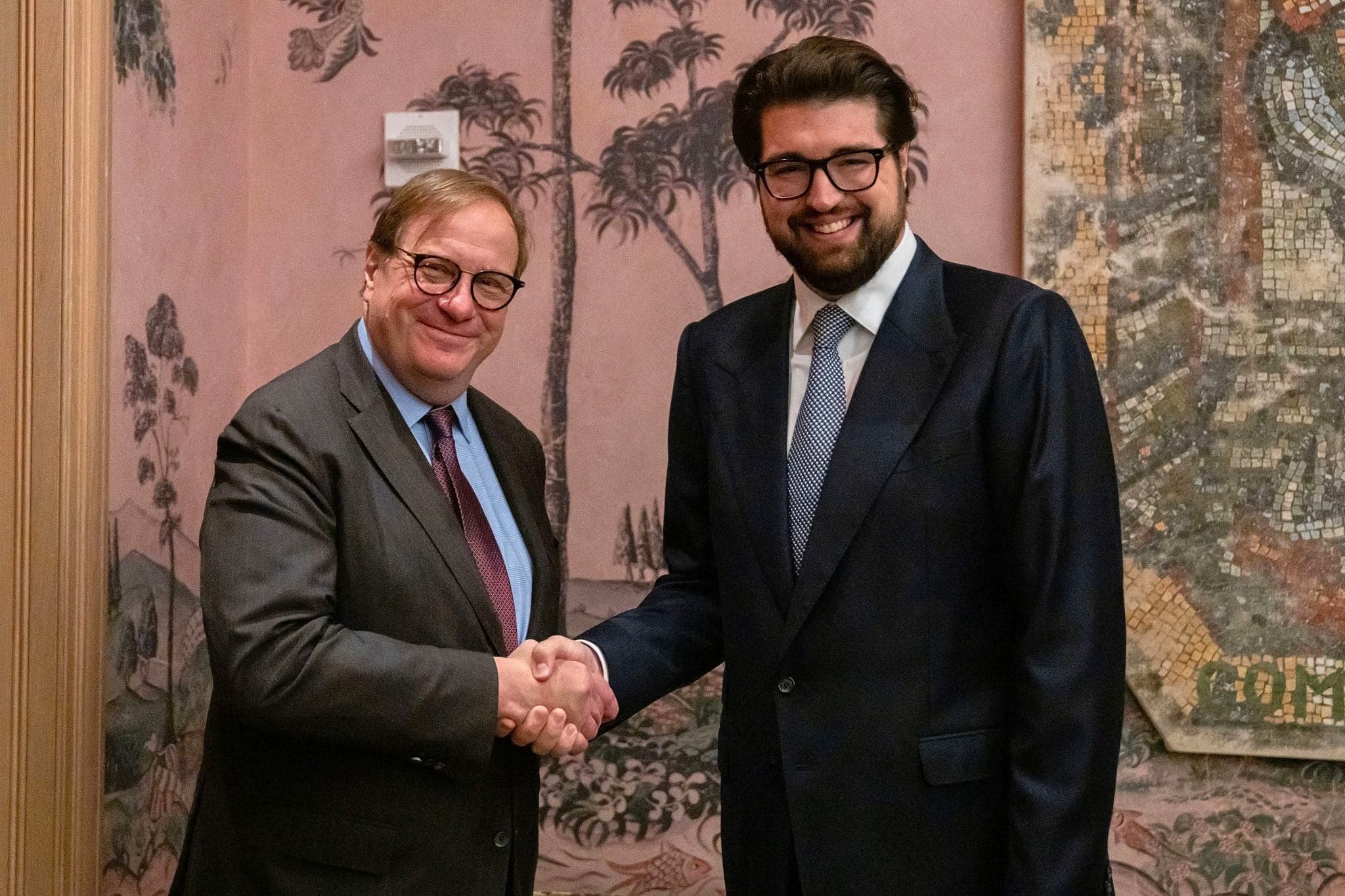
On the sidelines of the UN General Assembly in New York, Concelex and Atlantic Council Romania hosted the roundtable "Anchoring the Eastern Flank: Critical Infrastructure and Transatlantic Capital in Central and Eastern Europe", which was addressed by the President of Romania, Nicusor Dan. The event looked at how strategic infrastructure on the Eastern Flank will be assessed and financed over the next decade of investment.
Participants examined how the lessons learned from Ukraine are redefining infrastructure requirements near NATO's eastern border. The rapid restoration of a railway bridge, a transformer substation or a hospital depends critically on the immediate on-site availability of heavy equipment, compatible structural components and certified response teams, capabilities that cannot be mobilized within days in a crisis scenario.
"Ukraine has shown us that an asset is brought back into service by the capacity that exists before a crisis. Recovery depends on the equipment and crews already present in the territory, and full knowledge of how an asset works and how it fails stays with whoever built it. A state may hold every repair capability and still remain exposed if that knowledge sits under another jurisdiction. This makes the infrastructure industry a security capability, not just an economic one." said Radu Piturlea, CEO of Concelex and member of Atlantic Council's Board of Directors.
Concelex put forward two proposals. The first is to add delivery capacity to the qualification criteria for strategic projects, alongside the existing financial and regulatory criteria. The second is to give priority to long-term, availability-based public-private partnerships along strategic corridors, where the region's infrastructure companies are prepared to invest their own capital alongside transatlantic investors. So that both proposals can be verified, the company proposed a Strategic Infrastructure Index for NATO's Eastern Flank, which would record who can build each asset, who can restore it, how quickly, and under which jurisdiction.
One of the event's conclusions was that American investors see the Eastern Flank as one of the decade's major investment opportunities, provided that projects come with clearly allocated risks and with local partners able to build and maintain them over the long term. In this context, the region's infrastructure companies were approached as direct partners of transatlantic capital, and their delivery capacity as a criterion that should be measured and taken into account when strategic projects are assessed.
Alongside President Nicusor Dan, the event was attended by Minister of Finance Alexandru Nazare, Presidential Advisors Marius Lazurca (National Security and Foreign Policy) and Radu Burnete (Economic and Social Policy), and Romania's Ambassador to the United States, Andrei Muraru. Also at the roundtable were the Washington-based ambassadors of several Central and Eastern European countries, diplomats with experience in the region, representatives of the U.S. International Development Finance Corporation (DFC), investment banks and global funds, and American and Romanian companies in energy, engineering and infrastructure.
Free newsletters
Romania, in your inbox before your first coffee.
Get the Daily — the morning briefing, free, in English, unsubscribe anytime. Want business, real estate or travel digests too? Pick your newsletters →