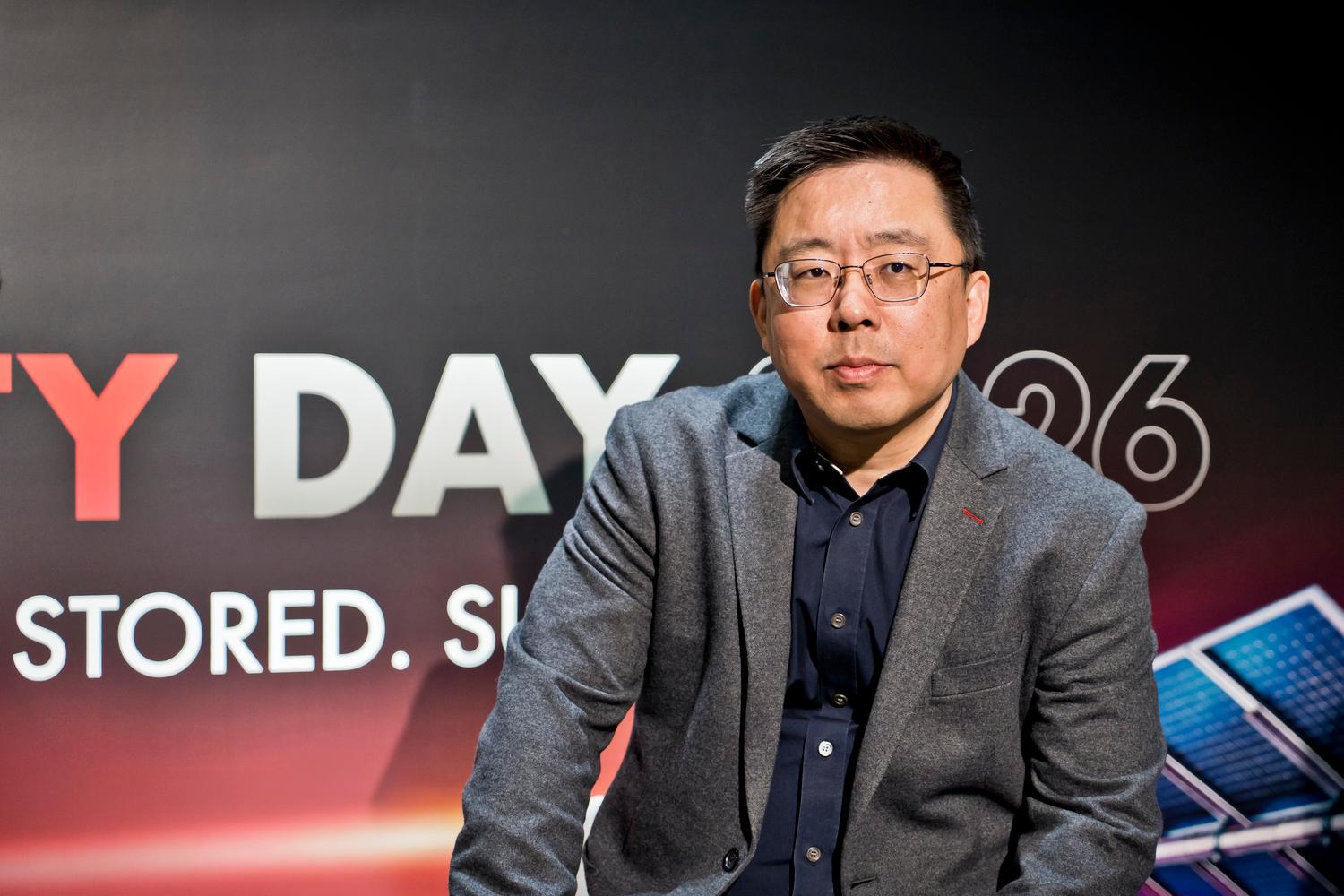
Leon Zhang (LONGi): “Our strategy is to help Romanian solar projects manage risk and create value over their full lifetime”
In the interview below, Leon Zhang, President of Utility Europe at LONGi, explains why installed capacity is the starting point rather than the finish line for a successful project, how the company's Back Contact technology and Hi-MO 9 Prime module aim to squeeze more generation out of constrained sites, what the LONGi ONE integrated platform offers developers weighing the storage business case, and how the company's plan for 15 European Centers of Excellence by 2028 is intended to bring engineering and service support closer to Romanian project teams.
Romania Insider
· 9 min read
Leon Zhang – President Utility Europe, LONGi
Romania has quietly become one of Europe's fastest-growing utility-scale solar markets. The country has passed 5 GW of cumulative installed solar capacity, supported by Contracts for Difference auctions, corporate PPAs and relatively streamlined permitting that have drawn international developers into the market at pace.
LONGi, the global solar technology company that develops and supplies high-efficiency PV products and integrated solar-plus-storage solutions, has held a leading position in Romania's utility-scale segment for more than three years. The company is now helping its Romanian partners make a larger transition: from building solar farms to building solar-plus-storage power plants. In Titu, Dambovita County, LONGi has signed an agreement for 50 MWh of liquid-cooled battery storage across two PV-plus-storage projects, while more than 200 MW of its modules have been deployed across its Romanian partner's projects since 2025.
In the interview below, Leon Zhang, President of Utility Europe at LONGi, explains why installed capacity is the starting point rather than the finish line for a successful project, how the company's Back Contact technology and Hi-MO 9 Prime module aim to squeeze more generation out of constrained sites, what the LONGi ONE integrated platform offers developers weighing the storage business case, and how the company's plan for 15 European Centers of Excellence by 2028 is intended to bring engineering and service support closer to Romanian project teams.
Read more in the Q&A interview below:
Romania Insider: Romania has become one of Europe's fastest-growing utility-scale solar markets. From LONGi's perspective, what makes it stand out today?
Leon Zhang: Romania stands out because it combines a strong solar resource with active developers and a policy environment that is helping projects advance. Contracts for Difference (CfD) auctions, corporate PPAs and relatively streamlined permitting have also attracted international developers and accelerated project development.
Romania has surpassed 5 GW of cumulative installed solar capacity, reflecting significant market growth. Since installed capacity does not necessarily imply that all systems are operational, it remains essential to distinguish between capacity that has been commissioned and projects that have been installed but are not yet operational.
For LONGi, Romania is not a new market we are testing. It is a market where we have built a strong position with developers and EPC partners, and where we are now helping customers move from building solar farms to building solar-plus-storage power plants. For investors, that transition is about more than adding equipment: when designed around the grid and market, storage can diversify revenue and help manage exposure to price volatility and curtailment. The value has to be assessed against the project's costs, connection conditions and revenue assumptions.
Free newsletters
Romania, in your inbox before your first coffee.
Get the Daily — the morning briefing, free, in English, unsubscribe anytime. Want business, real estate or travel digests too? Pick your newsletters →
Romania Insider: Many developers in Romania talk about capacity targets. What does success look like for a utility-scale project today?
Leon Zhang: I would put it this way: capacity is the starting point, not the finish line. A project is successful when it connects on schedule, produces energy at the hours the market values it, manages curtailment intelligently and delivers reliable returns over its operating life. Megawatts installed tell you very little about those outcomes. Delays can increase financing and development costs and defer revenue, so connection readiness, realistic delivery schedules and dependable equipment are financial considerations, not just engineering details.
In Romania, grid access is now a critical question. Recent competitive arrangements for allocating grid capacity signal a stronger focus on project readiness and deliverability. We welcome that direction: it rewards developers who plan carefully and suppliers who can support them with dependable products and local delivery.
Romania Insider: How would you describe LONGi's position in Romania's utility-scale solar market, and what has enabled the company to build and sustain it?
Leon Zhang: LONGi has maintained a leading market position in Romania for more than three years. First, product performance: our Hi-MO PV module series, built on HPBC 2.0 back-contact technology, is designed to support high energy yield per square meter and perform reliably in relevant site conditions, including heat and shading. For a developer, the commercial question is how that performance affects expected generation and lifecycle economics. Second, relationships: we work with developers and EPC companies from the early design stage, helping identify technical and delivery risks before they become costly changes. Third, reliability of supply and local execution, which can help protect project schedules and give investors and lenders greater confidence in delivery.
Romania Insider: LONGi's Technology Forest brings together eight core technologies. What does this R&D platform represent, and how does it translate into value for Romanian project developers?
Leon Zhang: The Technology Forest brings together eight core technologies developed by LONGi over nearly a decade of R&D, spanning cells, modules, hardware and software. At its heart is our Back Contact (BC) technology, which places the electrical contacts on the rear of the cell, leaving the front surface unobstructed. This design supports high conversion efficiency and can improve the capture of light across the cell surface; its practical contribution to a project depends on module design, site conditions and system configuration.
The Technology Forest represents a connected innovation platform rather than a single product or laboratory milestone. For developers, its relevance is whether these technologies can be manufactured consistently and contribute to dependable generation, reliable operation and predictable lifecycle performance. Those outcomes can influence revenue assumptions, operating costs and financing confidence, but the value should always be tested through project-specific modelling.
Romania Insider: Hi-MO 9 Prime is positioned as a leading module technology. What makes it distinctive, and how can it create value for Romanian utility-scale projects?
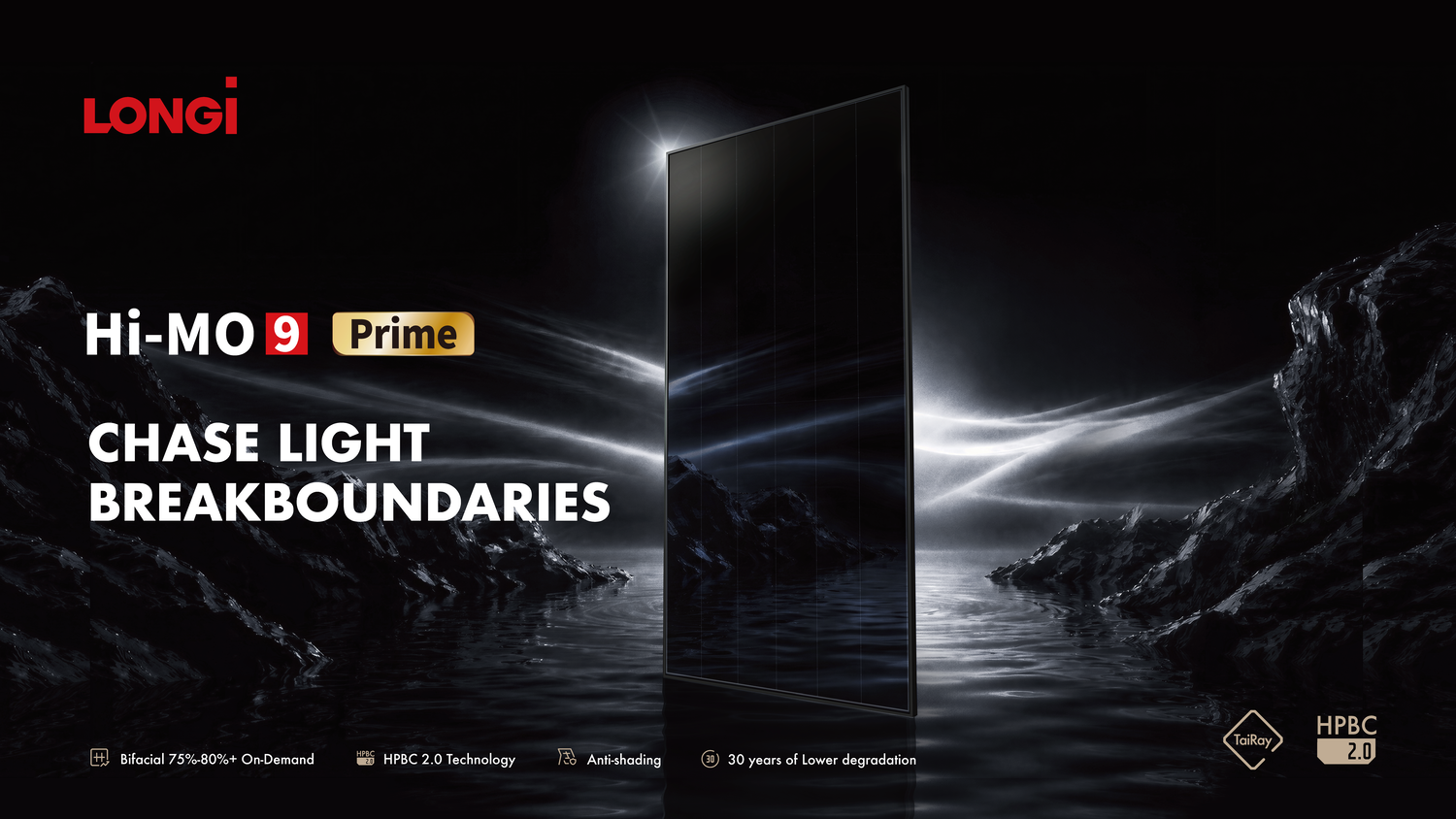
Leon Zhang: We sometimes describe Hi-MO 9 Prime as the "ultimate luxury for solar assets", not as a premium for its own sake, but as a way to make better use of a site's most valuable resource: land. It represents the latest evolution of LONGi's high-efficiency PV technology, built on our HPBC 2.0 Back Contact architecture, with mass-production module power of up to 680 W and module efficiency of up to 25.2%.
The practical advantage is the potential to generate more power from the same available area. In LONGi's representative project modelling, Hi-MO 9 Prime enabled a 4.62% increase in installed capacity compared with conventional non-Back Contact modules under identical land-area and layout conditions. For utility-scale developers, that could mean making more effective use of site boundaries and project infrastructure, subject to the specific layout and technical conditions. Combined with its efficiency and shading performance, this may support stronger project economics over the plant's operating life. The actual value should be assessed through project-specific modelling, including land constraints, system design and lifecycle assumptions.
Hi-MO 9 Prime high-efficiency PV module
Romania Insider: LONGi is expanding beyond modules into integrated solar-plus-storage solutions. Why is this important to the company's portfolio, and what does LONGi ONE offer customers?
Leon Zhang: Project value increasingly depends not only on how much energy a plant generates, but also on when it can deliver it and how it responds to grid and market conditions. Through LONGi ONE, customers can combine our Back Contact PV technology, storage solutions, engineering and controls in one integrated energy system, coordinated through a unified digital platform that manages generation, storage and consumption. The principle is simple: one system, one platform and one point of accountability, from design and commissioning through service and performance optimisation.
For customers, integration can reduce coordination gaps between suppliers and make it easier to manage schedule, interface and performance risks, factors that affect project costs and financing confidence. The actual benefit depends on project scope and contract structure. The business case also depends on each project's connection, market rules, financing and revenue assumptions.
In its first year, our European BESS business signed agreements representing more than 2.5 GWh. That momentum is backed by projects at different stages: in Italy, we have brought an integrated project combining 35 MWp of PV with 13.75 MW / 50.16 MWh of storage into operation and signed an agreement with a tier-one European IPP for a 300 MWh utility-scale PV-plus-BESS project. Together, these projects show how our European business is translating its growth into both operational experience and a strong pipeline.
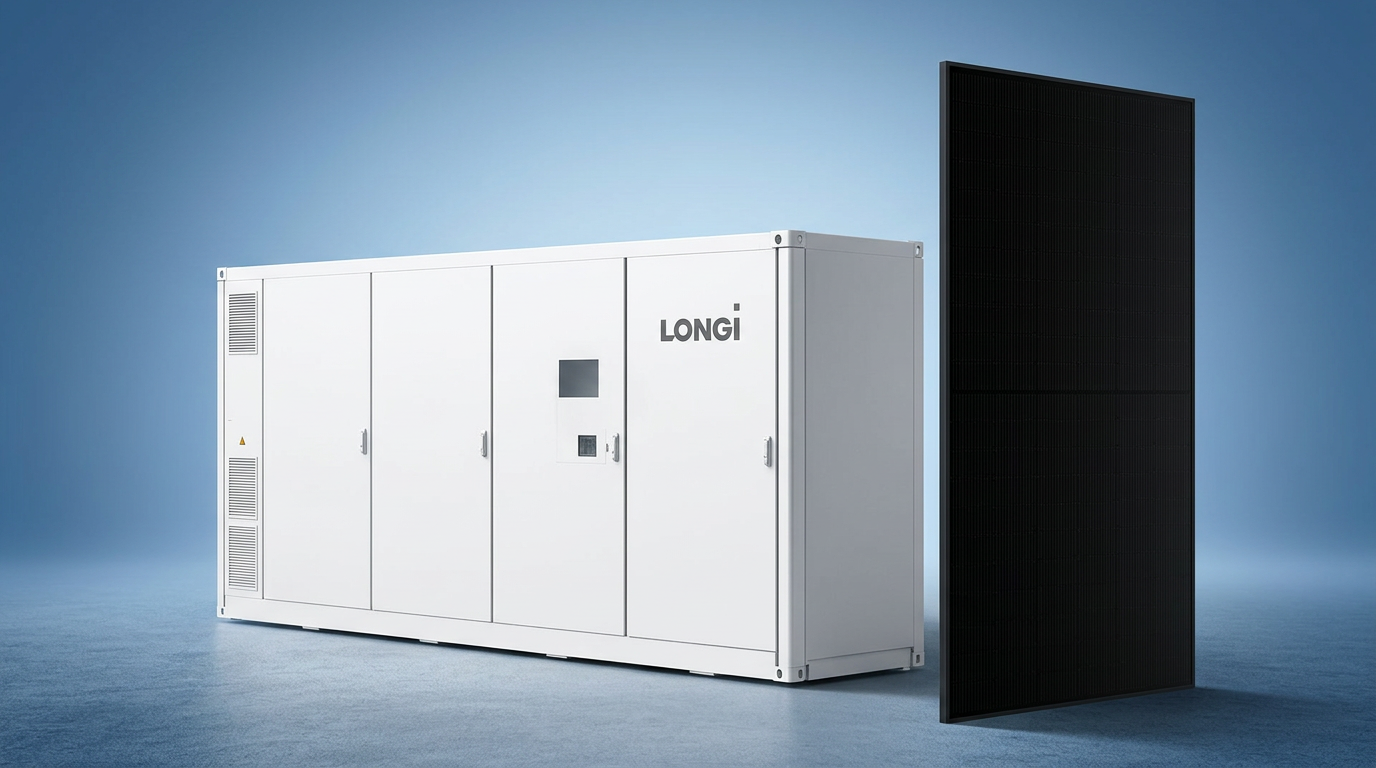
LONGi ONE PV+BESS Solutions
Romania Insider: How is LONGi translating this integrated approach into local projects and customer support in Romania?
Leon Zhang: In Titu, Dambovita County, LONGi has signed an agreement for 50 MWh of liquid-cooled BESS across two PV-plus-storage projects, paired with 20 MWp and 35 MW of solar capacity. More than 200 MW of LONGi PV modules have been deployed across the Romanian partner's projects since 2025. The systems are designed to support energy shifting, capacity firming and grid services; realised value will depend on dispatch, project configuration and market rules. The agreement illustrates a move from module supply toward an integrated solar-and-storage partnership.
Romania Insider: Romania's BESS market is expanding rapidly. What role should storage play in the energy transition, and how should developers and investors assess its business case?
Leon Zhang: Storage can help projects manage price volatility, negative prices, curtailment and grid requirements. Its financial value may come from combining revenue streams such as energy shifting, arbitrage and eligible grid services rather than relying on one source. But it is not a standard add-on: price spreads may support arbitrage, while rapid deployment can intensify competition for ancillary services. Developers should stress-test revenues alongside degradation, operating costs and market changes; diversification can help manage downside risk but cannot guarantee returns.
That is why we assess the business case early, alongside PV design and grid connection, so costs, expected revenues and downside scenarios are considered before major commitments. LONGi ONE integrates PV, BESS, engineering and controls to help stakeholders evaluate that combined case and manage project interfaces. Storage complements, but does not replace, grid investment; its value depends on location, connection, market rules and revenue model.
Romania Insider: Looking ahead, what are the main challenges and opportunities for Romania's and Europe's solar industries, and how will LONGi support stakeholders through the next phase of development?
Leon Zhang: The opportunity is to build a power system where solar contributes dependable value, not just additional capacity. That requires projects to be technically sound, grid-ready and supported by business models that reflect changing prices, storage economics and local market rules. The challenges include grid access, execution timelines, revenue uncertainty and ensuring that technology performs reliably over the asset's life.
LONGi's response is to keep investing in leading PV technology while expanding integrated solar-plus-storage solutions and working closely with developers and partners on project design and execution. We invested 4.3 billion yuan (approximately €524 million) in R&D in 2025; the measure of that investment is whether it leads to dependable performance, manageable lifecycle costs and credible project economics.
Our commitment is also local. Through our 2815 strategy, LONGi plans to establish 15 Centers of Excellence across Europe by 2028. Our first European centre opened in Madrid. These centres are intended to bring engineering expertise, service and customer support closer to project teams and operating assets. For Romanian stakeholders, that proximity can support responsive project execution and assistance throughout an asset's life. We are committed to growing with Romanian stakeholders and helping deliver projects that connect, perform and create value over the long term.