Nature in Făgăraș Mountains: The edelweiss in Romania
Romania-Insider.com is publishing a series of articles about wildlife in Romania, zooming in on the wild animal and plant species in the Fagaras Mountains area. This editorial series is sponsored by the Foundation Conservation…
RI Newsroom · Journalist
· Updated · 4 min read
Romania-Insider.com is publishing a series of articles about wildlife in Romania, zooming in on the wild animal and plant species in the Fagaras Mountains area. This editorial series is sponsored by the Foundation Conservation Carpathia.
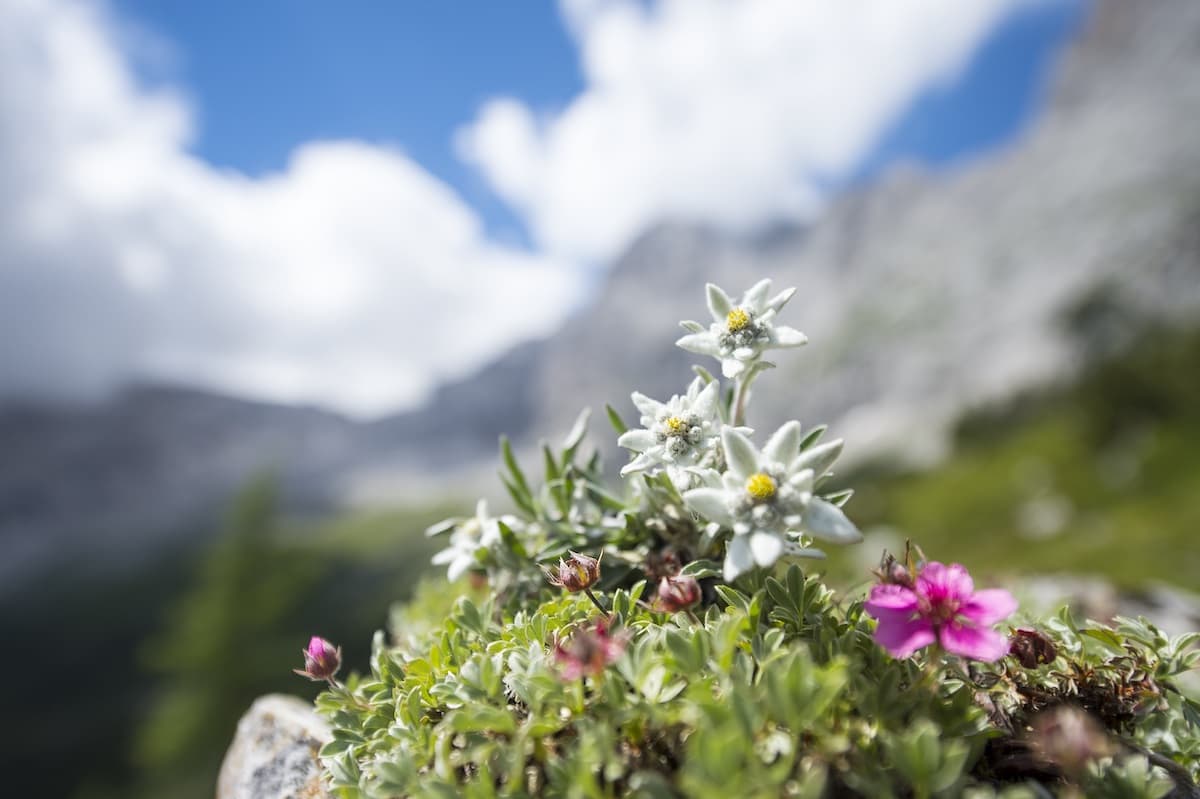
Usually associated with purity, royalty and devotion, the edelweiss is a rare and beautiful mountain flower that can also be found in the Romanian Carpathian Mountains. Protected in many countries, including in Romania, this flower has been having many symbolic uses in various areas, from military and commercial to monetary and tourism, becoming a quite popular flower despite (or maybe thanks to) being rare and hard to reach.
The edelweiss is considered the royal plant. In fact, its name derives from the German word Edelweiß, which is composed of edel, which means noble and weiß, which means white. Thus, edelweiss could be translated as the noble white. In Romanian is called floare de colt, but is also known as floarea reginei (the queen’s flower). In the Italian part of the Alps the flower is referred as Stella Alpina while in the French Alps as Étoile des Alpes, both names meaning Star of the Alps.
The edelweiss prefers rocky places at altitudes between 1,800 and 3,000 meters, being usually associated with the Alps and the Carpathians. In Romania, this beautiful flower grows basically everywhere in the rocky, alpine areas, such as those in the mountains of Maramures, Rodnei, Obcinele Bucovinei, Rarau, Ceahlau, Ciucas, Bucegi, Fagaras, Piatra Craiului, and others.
The edelweiss is a perennial plant of the family Asteraceae, which also includes the daisy and the sunflower. It has small flower heads in a dense cluster, and, below these flower heads, white petals that are arranged in the form of a star. The white, dense hair covering them, which appears to protect the plant from cold and ultraviolet radiation, gives the flowers and the leaves a wooly appearance. The stalks can grow to a size of 3–20 cm in the wild or up to 40 cm in cultivation. The flowers bloom in the summer, between July and September.
Because the edelweiss grow in hard to reach areas and are protected from picking in many countries, people began planting them in their gardens (for the chance to admire them whenever they feel like or to sell them in tourist markets). However, these flowers need specific conditions to grow, such as a rocky place and a specific soil. The plants are short lived and can be grown from seed.