A look into Brasov's Multicultural Day: Indonesia
In a cultural and tourist city like Brașov, a heterogenous and multicultural society is what makes it stand out from the rest.
In a cultural and tourist city like Brașov, a heterogenous and multicultural society is what makes it stand out from the rest.
This belief is what supports the idea of Ziua Multiculturalității în Brașov(Multiculturality Day in Brașov), an annual celebration an annual celebration by Migrant Integration Center Brașov co funded by Active Citizens Fund Romania, a program financed by Iceland, Liechtenstein and Norway through EEA Grants, Brașov Municipality through the Cultural Programs department and Erasmus+ Programme of the European Union, Empathy Project.
Every year, the festivity aims to promote intercultural dialogue and encourage tolerance and respect for diversity, while combatting stereotypes among the local and migrant/immigrant communities.
Two activities - expositional stands for each participating country and a multicultural show - brought the best of over 100 representations of 21 countries and four continents at its 2022 edition on October 9 at the Council Square.
Maria Camila (Colombia) and Horia Moasa (Romania) opened the multicultural show, followed by live musical performances from Ukraine, Vietnam, Moldova, and South Korea.
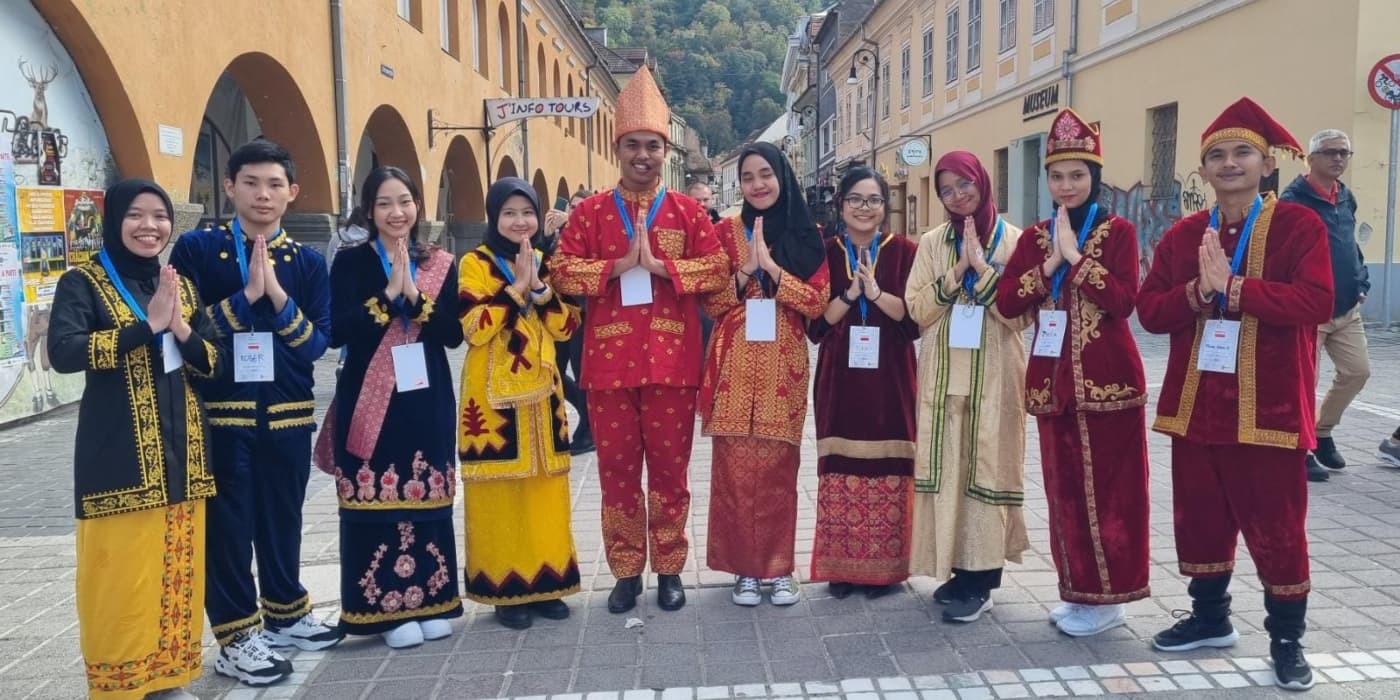
Indonesia was one of the participating countries and performers, presenting the traditional dance of Bahalai from Central Kalimantan, performed by Reana Deva, an Indonesian student at Babes-Bolyai University, Cluj-Napoca. Both the show and the expo booth were prepared mostly by students during their short breaks from their respective universities.
Ilham Catur, the president of the Association of Indonesian Students in Romania (PPI Rumania), arrived in the country last year to pursue his economics and international relations master's degree at the Ovidius University of Constanța. Alongside his right-hand man, Fadel Muhammad Zikrillah from the Transilvania University of Brașov, they gathered at least 12 other Indonesian students from other Romanian cities to help prepare the exhibition.
"I gathered them by offering free accommodation, since they've come all the way from other cities, from our organization's budget," Ilham explains. When asked if the Indonesian Embassy in Bucharest and Brașov City Hall provided them with material support, he says: "We have all the stuff - traditional costumes, sculptures, flags, lunch, and a RON 200 financial aid."
In his turn, Fadel arrived in Romania over two years ago as part of the scholarship program offered by the Romanian Ministry of Foreign Affairs. He represented his Minangkabau, West Sumatra roots during the event, sporting a bright, red costume with gold patterns and a long traditional cap.
"The preparation itself took about two months; due to the location of students in different cities and the busyness of each member, all coordination was done online, until the D-1 event," he says.
Free newsletters
Romania, in your inbox before your first coffee.
Get the Daily — the morning briefing, free, in English, unsubscribe anytime. Want business, real estate or travel digests too? Pick your newsletters →