A Linden Tree on the Move: Sustainability in Action at the British School of Bucharest
This autumn, a mature linden tree on the campus of the British School of Bucharest (BSB) was relocated to a new position within the school grounds to make space for the development of new sports facilities. The operation, supervised by two…
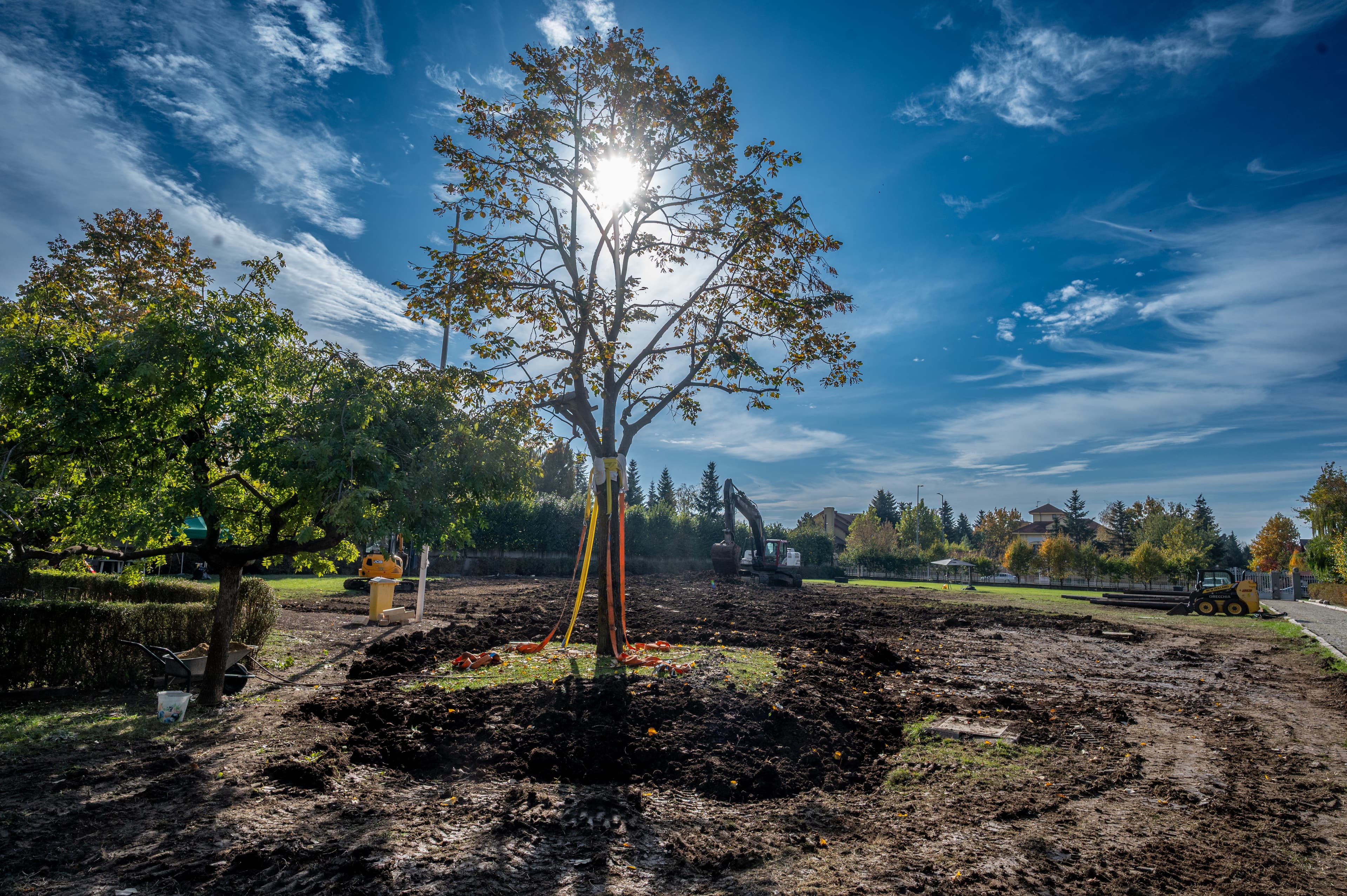
This autumn, a mature linden tree on the campus of the British School of Bucharest (BSB) was relocated to a new position within the school grounds to make space for the development of new sports facilities. The operation, supervised by two UK specialists from Ruskins Trees & Soil Biology Ltd, represents the first such relocation for a tree of this size completed in Romania.
Planning and Precision
The decision to relocate the tree, rather than remove it, required detailed preparation and technical coordination. Over several weeks, the soil was examined and stabilised and the roots were prepared for safe transfer. The tree canopy itself was pruned to reduce wind loading and water stress, preparing it for the transplant and recovery years to come. The specialists from Ruskins Trees & Soil Biology Ltd applied a non-invasive technique to protect the root system. The soil surrounding the roots was cut gradually and shaped into a compact root-ball, avoiding the use of heavy machinery. This method preserves the tree’s structure and supports its adaptation to new soil conditions.
“The careful handling of the plant is the most challenging part. Each tree is different and you only discover what you are dealing with once you start digging. It requires engineering decisions on the spot and constant adjustments to protect the roots and maintain the tree’s stability throughout the process,” said Keith Morley, Managing Director at Ruskins Trees & Soil Biology Ltd (UK).
The tree itself, together with its root-ball, weighed an estimated 35-45 Tonnes. To ensure the biological system is moved gently, it was pulled across approximately 50 meters by a 300kg chain using steel pipes as rollers to reduce friction and a carefully engineered steel raft to support the system yet sustain the enormous forces required to move such a heavy system. The science and maths here range from GCSE to A-level, allowing students to see directly how what they learn is applied in the real world. Once in the final position, the area around the tree was backfilled respecting the soil layers but also utilising the same topsoil from the original spot the tree grew in to ensure compatible microbiology, maximising recovery.
Sustainability in Practice
The relocation provided students with a direct example of sustainability in action. It showed how planning, research and collaboration can reduce environmental impact and balance development with preservation.
“This tree has been sequestering carbon since it first started to grow. If we cut it down and chop it for firewood or chip it, we release that carbon back into the atmosphere and we lose all the future carbon it would have captured. To plant a new tree in its place means losing around 35 years of carbon capture, so we have to understand we cannot keep cutting trees down when many of them can be saved,”
Free newsletters
Romania, in your inbox before your first coffee.
Get the Daily — the morning briefing, free, in English, unsubscribe anytime. Want business, real estate or travel digests too? Pick your newsletters →