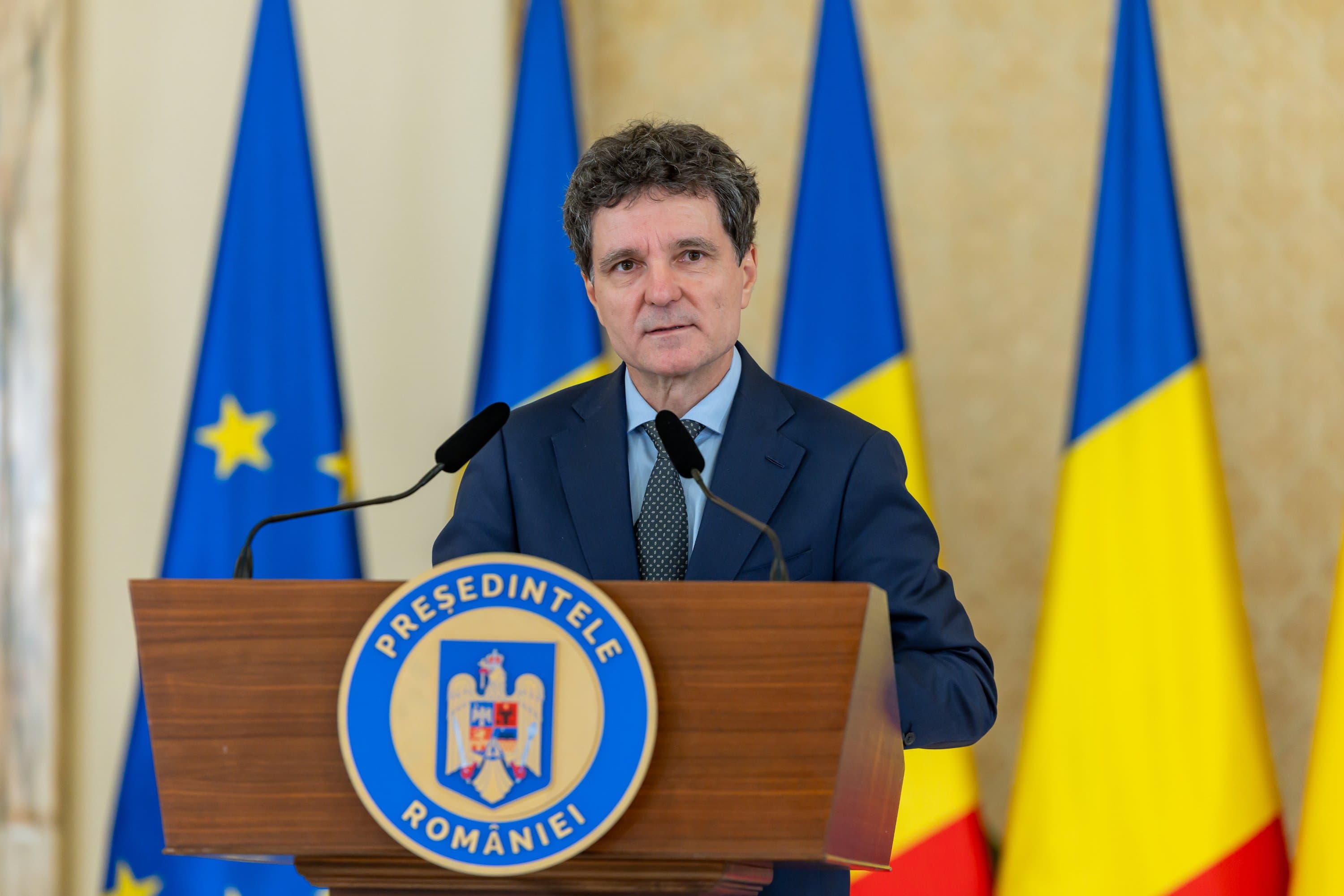
Romania’s president expected to designate new PM candidate
President Nicușor Dan is expected to make his fourth nomination for prime minister on Monday evening, October 5, after completing consultations with parliamentary parties.
iulian ernst · Journalist
· 3 min read
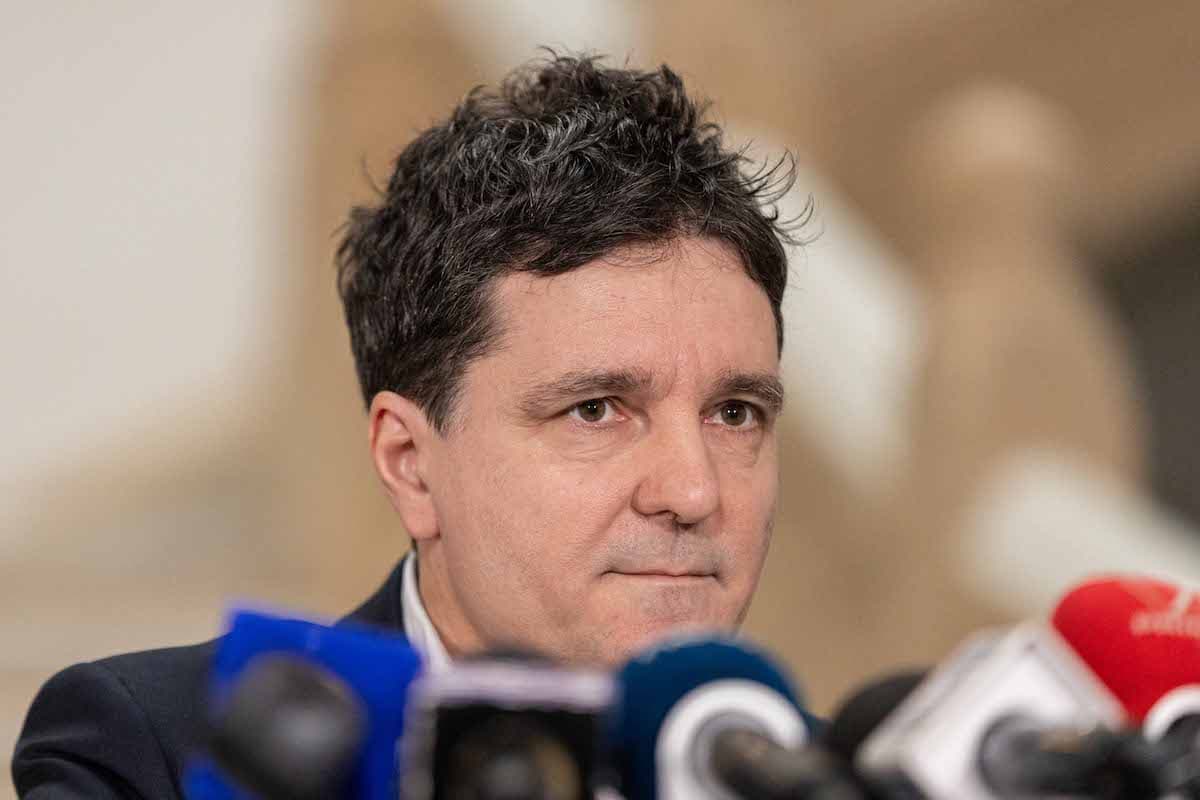
The consultations are taking place after the Parliament rejected the government proposed by PM-designate Siegfried Mureșan on September 30, extending the political crisis that has lasted since the Ilie Bolojan government was toppled in May.
Sources cited by Digi24 indicated that Dan has two favourites for the position: PSD leader Sorin Grindeanu and interim finance minister Alexandru Nazare. Grindeanu has repeatedly said that PSD is prepared to assume responsibility for forming a government, while also insisting that any government must have a transparent parliamentary majority behind it.
Sorin Grindeanu has no explicit parliamentary majority behind him.
A Grindeanu government would face the immediate problem of securing PNL support, given the party’s continued backing for Ilie Bolojan, who consolidated his internal position after May when his government was toppled by a no-confidence motion initiated by PSD and AUR.
PSD could seek support from AUR – although AUR has no incentive to offer such support, but may engage in negotiations for visibility. Furthermore, such an arrangement is incompatible with president Dan’s stated opposition to bringing AUR into the ruling majority, on the grounds that this would risk Romania’s relations with its foreign partners.
In practice, a Grindeanu government would therefore appear to require both a significant number of PNL lawmakers to break with their party’s position, and support from AUR and potentially lawmakers leaving its parliamentary group (thus bypassing the president's red line).
A further issue of a full-fledged PSD government would be the fiscal policy. PSD has advocated measures aimed at stimulating economic activity and improving social outcomes. In the current context, however, a significant fiscal loosening would conflict with the consolidation requirements underpinning Romania’s sovereign ratings and could increase the risk of renewed fiscal slippage.
Alexandru Nazare could offer a broader basis for parliamentary support.
Although not necessarily an independent candidate, given his previous affiliation with PNL, Nazare is now perceived more as a technocrat, particularly after his recent role at the Finance Ministry and his engagement with international rating agencies. His current position would also give him continuity in discussions with the rating agencies at a critical moment for Romania’s sovereign credit profile.
A Nazare government could potentially offer a compromise between PSD’s demand for domestic policy measures (no reforms) and the fiscal consolidation required to preserve Romania’s investment-grade rating. The difficulty would be reconciling the political demands of a future coalition with the need for structural measures that provide a lasting improvement in the budget balance.
Other names circulating ahead of the consultations include Eugen Tomac, who was previously proposed by Dan but withdrew before a parliamentary vote, former Romanian ambassador to France Luca Niculescu, and Leonardo Badea, first deputy governor of the National Bank of Romania. Public reports have also mentioned other PNL figures among the names being considered.
President Dan still pressures for the revival of the four-party centrist coalition.
Following Mureșan’s failure in Parliament, Dan drew a red line around the participation of AUR in a future government. His argument has not been that AUR’s participation would be intrinsically unacceptable, but that bringing the party into government would endanger Romania’s relations with its foreign partners. This position has become one of the central constraints on the negotiations for a new ruling majority.
Dan has also argued strongly against early elections, most recently saying that investors financing Romania’s deficit had sent him a message against such a scenario.
The combination of the president’s opposition to snap polls, the absence of an explicit majority behind the leading candidates and the increasingly difficult negotiations among the parliamentary parties leaves the fourth nomination facing the same fundamental problem as the previous three: securing enough votes to actually form a government.
Free newsletters
Romania, in your inbox before your first coffee.
Get the Daily — the morning briefing, free, in English, unsubscribe anytime. Want business, real estate or travel digests too? Pick your newsletters →