Save the Children Romania Continues Hospital Support in Reghin and Târgu Mureș, Backed by Donations from Libris Readers
Donations from Libris readers continue to make a direct impact in hospitals across Romania. The latest investments, carried out by Save the Children Romania with the support of Libris readers, have equipped two medical units in Mureș…
Donations from Libris readers continue to make a direct impact in hospitals across Romania. The latest investments, carried out by Save the Children Romania with the support of Libris readers, have equipped two medical units in Mureș County with essential medical devices for newborn care and the diagnosis of pediatric digestive conditions.
A total of RON 215,000 raised through reader donations has been invested in medical equipment for hospital departments where rapid intervention can make a decisive difference. At the “Dr. Eugen Nicoară” Municipal Hospital in Reghin, the Newborn Care Unit received a high-performance incubator and two phototherapy lamps, with a total value of RON 102,755. The unit provides care each year for around 500 to 600 newborns from Reghin and nearby communities. Before the new equipment was delivered, the ward operated with limited and, in some cases, outdated devices, which made it difficult to handle multiple urgent cases at the same time. Immediate access to an incubator and phototherapy can be the difference between stabilizing a newborn locally and transferring the child to another hospital. The donated equipment now allows the team to monitor vulnerable newborns more effectively, treat neonatal jaundice, and safely stabilize premature babies or infants facing adaptation problems after birth, reducing both complications and the need for emergency transfers to higher-level hospitals. For some children, the impact is immediate. Diana was born prematurely at 35 weeks, weighing 2,240 grams. Although her condition was fragile at birth, her recovery progressed well with the help of the medical team and the available equipment. For seven days, the incubator provided the controlled temperature, oxygen, and humidity she needed for stabilization and development. Her condition improved, and she was later discharged safely into her mother’s care.
“This donation directly improves the quality of care we can provide to newborns in our community. The equipment allows us to act more quickly and more effectively for the health of the hospital’s smallest patients,”said Florentina Simona Toncean, Manager of the “Dr. Eugen Nicoară” Municipal Hospital in Reghin.
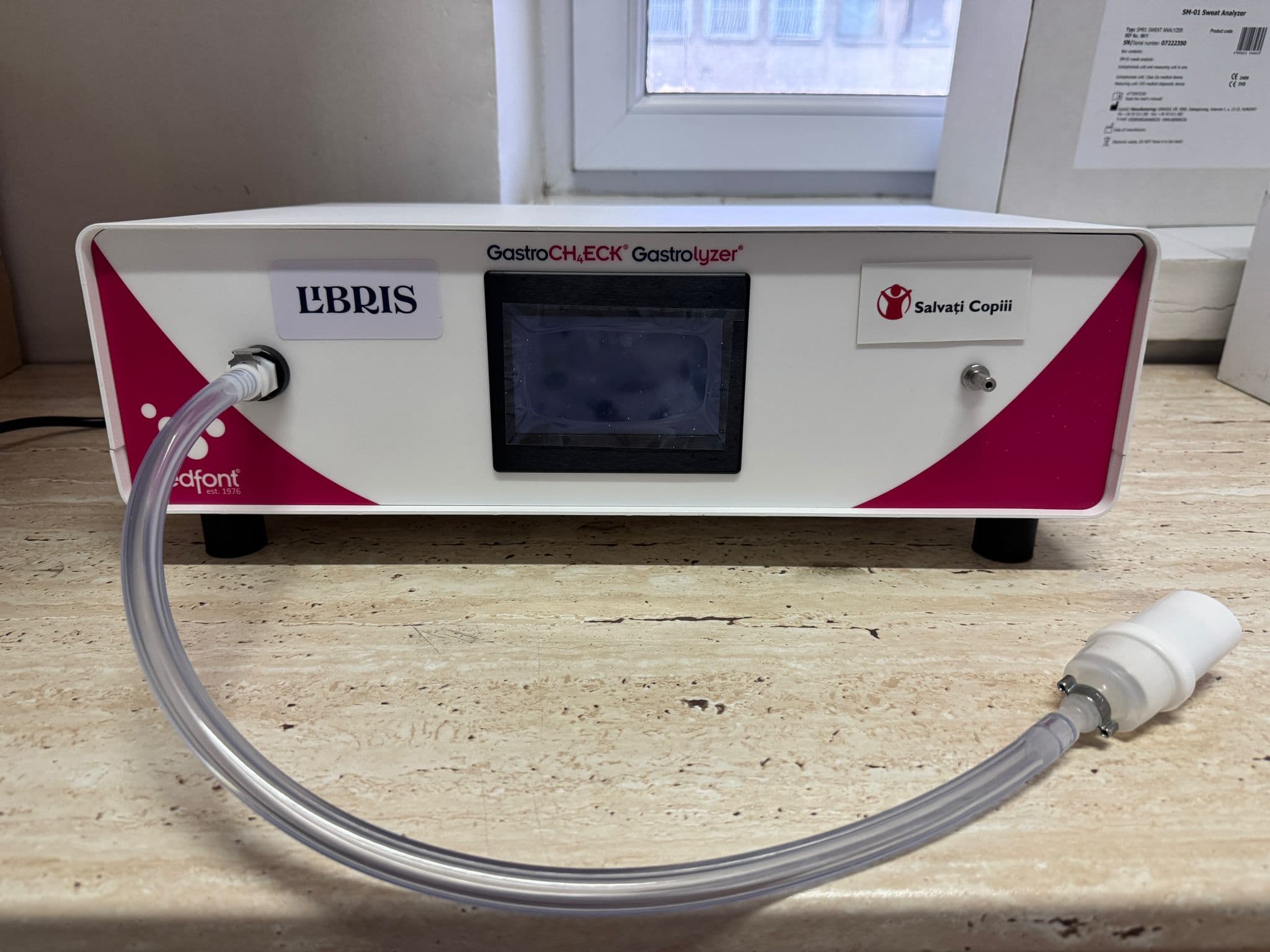
At the same time, the Pediatrics Department of the Târgu Mureș County Emergency Clinical Hospital received a Gastro+™ Gastrolyzer® respiratory gas analyzer, worth RON 113,038. The device enables non-invasive diagnosis of common digestive disorders in children, including lactose intolerance and small intestinal bacterial overgrowth, SIBO. The department treats children from Mureș County and surrounding areas, with cases ranging from acute illnesses to chronic digestive, allergy-related, and metabolic conditions. Symptoms such as recurring abdominal pain, bloating, diarrhea, and constipation often affect children’s quality of life and contribute to missed school days. Until now, the hospital had no equipment to measure hydrogen and methane in exhaled air, which significantly limited its diagnostic capacity. In many cases, children had to be referred to other medical centers or remained without a clear diagnosis. The introduction of this technology makes it possible to establish diagnoses more quickly and accurately, begin targeted treatment sooner, and avoid invasive investigations. More than 200 children per year are expected to benefit directly from this method. For some patients, the difference is substantial. Alex, a 10-year-old boy, had struggled for nearly three years with severe abdominal pain and frequent diarrhea that disrupted his daily life. He often missed school and gradually withdrew from activities typical for his age. A breath test measuring hydrogen and methane levels indicated small intestinal bacterial overgrowth. Once the diagnosis was established and the right treatment began, his symptoms improved and he gradually returned to a normal routine.
Free newsletters
Romania, in your inbox before your first coffee.
Get the Daily — the morning briefing, free, in English, unsubscribe anytime. Want business, real estate or travel digests too? Pick your newsletters →